We partnered with Montek for the development of our eCommerce platform, HerCliq.com and the experience has been nothing short of outstanding. From the initial concept to the final launch, Montek's team demonstrated deep ...
MK

Connecting ideas and people – how talk can change our lives.
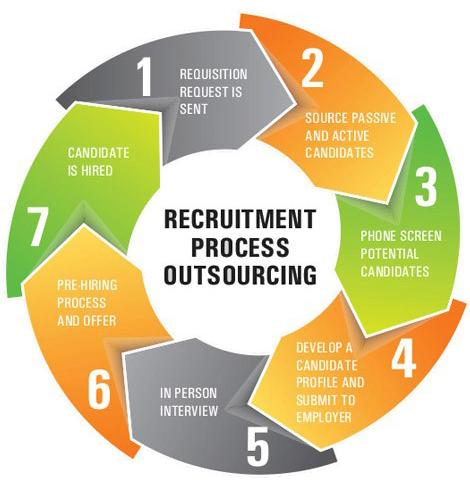
Attracting and retaining top talent has become one of the hardest, most expensive problems a growing business faces. Sourcing is slower than it used to be, screening takes longer, and the cost of a bad hire keeps climbing. This is exactly why Recruitment Process Outsourcing (RPO) has moved from a niche enterprise tactic to a mainstream strategy that companies of every size are adopting in 2026.
This guide breaks down what RPO actually is, why it has become the next big thing in talent acquisition, the real benefits backed by industry data, and a practical framework for deciding whether it's right for your organization.
Recruitment Process Outsourcing is a business model where an organization transfers all or part of its recruitment function to an external specialist. Unlike a traditional staffing agency that simply supplies candidates, an RPO provider embeds itself into the client's hiring process — owning sourcing strategy, screening, employer branding, interview coordination, and often onboarding, using the client's own systems and reporting lines.
According to the Society for Human Resource Management (SHRM), RPO adoption has grown steadily as companies look for ways to control hiring costs without sacrificing quality or speed, particularly in competitive talent markets like technology, healthcare, and manufacturing.
Several forces are converging to make RPO more relevant than ever:
Deloitte's Human Capital Trends research consistently shows that organizations investing in specialized talent acquisition partnerships see measurably faster and more consistent hiring outcomes than those relying purely on internal teams.
Most companies underestimate what recruitment actually costs them because the expense is spread across salaries, software, and lost productivity rather than showing up as a single line item. A typical in-house recruitment function carries:
When these costs are added together, many organizations find that maintaining a fully in-house recruitment function costs significantly more than an equivalent RPO engagement — without necessarily delivering better hiring outcomes.
Outsourcing recruitment activities reduces the overhead of maintaining a large in-house team, job board subscriptions, and recruitment technology infrastructure. RPO providers leverage economies of scale, specialized tools, and industry expertise to streamline hiring, while giving organizations the flexibility to scale recruitment effort up or down as hiring needs change — without the fixed cost of a permanent internal team.
RPO providers are recruitment specialists who stay current on sourcing trends, technology, and candidate engagement strategies. Their recruiters are well-versed in screening, structured assessments, and employer branding, giving client organizations access to a wider talent pool and stronger candidate quality than they could reliably source alone.
Manual recruitment is slow, and delays in filling critical roles carry a real business cost. RPO providers use applicant tracking systems and automated workflows to streamline sourcing, screening, and onboarding, while handling administrative work like job posting, interview scheduling, and background checks — freeing internal HR teams to focus on strategic priorities instead of coordination.
A strong candidate experience directly affects an organization's ability to attract and retain talent. RPO providers prioritize prompt communication, personalized interactions, and timely feedback throughout the hiring process, which strengthens employer brand and improves offer acceptance rates — even among candidates who aren't ultimately selected.
RPO providers track recruitment metrics — cost-per-hire, time-to-fill, candidate quality, source effectiveness — and turn them into actionable reporting. This gives leadership visibility into what's actually working in their talent acquisition strategy, rather than relying on gut feel or anecdotal impressions.
Hiring needs rarely stay flat. Seasonal demand, project-based work, and expansion plans all create spikes and lulls. RPO offers the flexibility to scale recruitment effort to match actual demand — whether that's filling a single specialized role or running a large-scale hiring campaign — without the fixed cost of over-staffing an internal team during quiet periods.
RPO isn't one-size-fits-all. Common models include:
The two models are often confused, but they work differently. A traditional staffing agency is typically engaged per-role, paid on a contingency or retained basis, and has limited visibility into the client's broader hiring strategy. An RPO provider, by contrast, integrates into the client's process as an extension of the HR function — often working from the client's own applicant tracking system, aligned to employer branding guidelines, and accountable for hiring metrics over an ongoing engagement rather than a single placement.
| Traditional Staffing Agency | RPO Provider |
|---|---|
| Engaged per role | Engaged as an ongoing function |
| Paid on contingency/placement fee | Structured pricing tied to volume or service level |
| Limited process integration | Deeply integrated into client's ATS and process |
| Focused on filling positions | Focused on end-to-end hiring outcomes and metrics |
| Minimal employer branding alignment | Represents client's employer brand consistently |
While RPO can work across almost any sector, it delivers the clearest ROI where hiring volume, hiring complexity, or both are high:
Reality: Final hiring decisions remain with the client organization. RPO providers manage sourcing, screening, and coordination — not the ultimate call on who gets hired.
Reality: Project-based and selective RPO models are specifically designed for small and mid-sized businesses that need targeted recruitment support without a full-scale engagement.
Reality: A good RPO partner invests time upfront to understand company culture, values, and employer brand — because candidate experience and cultural fit are core to what they're measured on.
Reality: With a phased implementation and pilot approach, most organizations transition to RPO with minimal disruption to ongoing hiring.
The organizations that get the most value from RPO tend to treat the transition as a genuine partnership rather than a vendor handoff. That means involving hiring managers early, being transparent about past hiring pain points, and giving the RPO provider enough context about the business to make good judgment calls — not just a job description to fill.
Evaluate potential partners on: relevant industry experience, technology and reporting capability, transparency around sourcing methods, references from comparable clients, and cultural fit with your organization. A good RPO partner should be able to clearly explain how they measure and improve hiring outcomes over time, not just supply resumes.
Beyond the basics, dig into how a prospective partner actually operates day to day. Ask for a walkthrough of their sourcing methodology for a role similar to yours, and ask specifically how they handle a hiring manager who is unhappy with a shortlist — the answer reveals a lot about how collaborative and responsive the engagement will be in practice. Request sample reporting dashboards so you know exactly what visibility you'll have into pipeline health, not just final placements. And always speak to at least one existing client in a comparable industry or company size, since RPO providers that excel with enterprise clients don't always translate well to a fast-moving mid-sized business, and vice versa.
Contract structure matters as much as capability. Look closely at how pricing scales with volume, what happens if hiring needs drop sharply for a quarter, and what the exit terms look like if the partnership isn't working. A transparent RPO provider will walk you through all of this before you sign, rather than leaving it buried in fine print.
RPO is continuing to evolve alongside broader HR technology trends:
Montek Services is a recruitment and HR outsourcing partner helping organizations across India streamline hiring through a combination of experienced recruiters and modern recruitment technology. Whether you need full-scale RPO support or help with a single hard-to-fill role, our team is built to adapt to your specific hiring needs.
RPO is a business model where an organization outsources some or all of its recruitment function to an external specialist who manages sourcing, screening, and hiring using the client's own systems and standards.
A staffing agency typically fills individual roles on a per-placement basis, while an RPO provider integrates into the client's broader recruitment process as an ongoing, accountable extension of the HR function.
No. Project-based and selective RPO models make outsourced recruitment support accessible to small and mid-sized businesses that need help with specific roles or hiring surges, not just full-scale enterprise engagements.
Industries with high hiring volume or specialized skill requirements — technology, manufacturing, healthcare, and engineering — typically see the strongest ROI from RPO due to the complexity and competitiveness of their talent markets.
Most organizations see measurable improvements in time-to-hire and candidate quality within the first few hiring cycles, though full process optimization typically takes a few months as reporting baselines are established.
Not necessarily. Many RPO engagements work alongside an existing HR team in a hybrid model, handling recruitment execution while internal HR focuses on strategy, culture, and employee relations.
Pricing models vary — common structures include per-hire fees, monthly retainers, or hybrid models combining a base fee with performance-based components, depending on hiring volume and scope.
Yes. RPO providers with specialized recruiters are often better positioned to fill niche or highly technical roles than a generalist internal team, since they maintain deeper networks in specific talent markets.
One of RPO's core advantages is scalability — providers can typically flex capacity up quickly to handle hiring surges without the lead time required to hire and train additional internal recruiters.
Track the same core metrics used to evaluate any recruitment function: time-to-hire, cost-per-hire, quality of hire (often measured via retention and performance data), and candidate satisfaction scores.
Recruitment Process Outsourcing is transforming how organizations approach hiring — delivering cost efficiency, specialized expertise, faster time-to-hire, stronger candidate experience, and data-driven decision-making, all while remaining flexible to changing business needs.
Looking for a recruitment partner to outsource your hiring process? Montek Services is a trusted staffing partner helping organizations handle recruitment effectively. Contact Montek Services today to discuss outsourcing your recruitment process.

We partnered with Montek for the development of our eCommerce platform, HerCliq.com and the experience has been nothing short of outstanding. From the initial concept to the final launch, Montek's team demonstrated deep ...
Montek Services is a highly skilled team with an eye for details. Our expectation meets 100%. The project management and communication works really well through the online project tools and the dedicated project manager ...
Montek's website design team far exceeded my expectations on every front, we have very high expectations. The end product is a beautiful website that define who we are as company. Every person I worked with at Montek was...