We partnered with Montek for the development of our eCommerce platform, HerCliq.com and the experience has been nothing short of outstanding. From the initial concept to the final launch, Montek's team demonstrated deep ...
MK

Connecting ideas and people – how talk can change our lives.
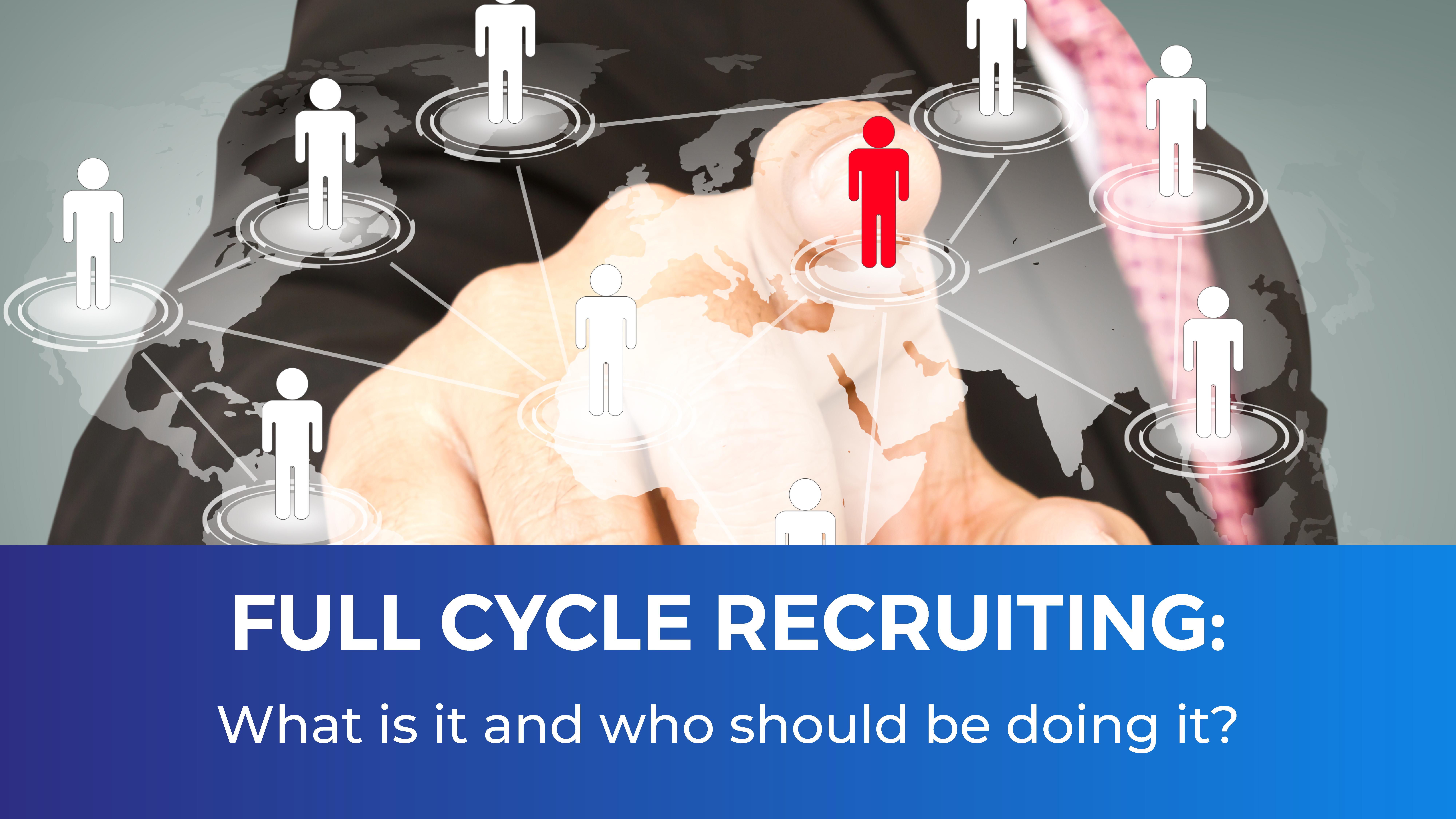
Current recruitment and selection practices may not be enough to bring in top talent in a fast-changing labor market. To compete effectively, businesses often need to upgrade their hiring procedures or adopt new technologies, resources, and workflows. One workflow that consistently succeeds is full cycle recruiting.
Full cycle recruiting — also known as full life cycle recruiting or end-to-end recruiting — describes a complete recruitment process where a single recruiter is involved in every step. Six major stages make up a full cycle: planning, sourcing, screening, selection, hiring, and onboarding. A full cycle recruiter owns each stage, from vacancy intake and candidate sourcing all the way through extending the job offer and onboarding the new hire.
Who owns full cycle recruiting typically depends on the size of the organization. In startups and smaller companies, this is often the HR generalist who also functions as the full-cycle recruiter, handling every stage personally.
In larger companies, people team members typically specialize in different phases of the hiring process rather than owning the entire cycle individually — though there's usually still one person monitoring the process end to end. Businesses can also choose to outsource the entire hiring cycle to a specialized staffing agency rather than managing it internally.
Six phases make up the full cycle of the hiring process. Neglecting or mishandling any one of them can slow a company's ability to attract top talent quickly, while executing each stage well makes it considerably easier to adapt as the job market shifts.
The preparation stage begins when a vacancy opens, prompting businesses to write new job descriptions or refresh existing ones. Before drafting, it helps to picture the ideal candidate clearly: what role will they play in the company, and which credentials are genuinely required? Answering these questions upfront makes job postings significantly more effective.
Once the job description is finalized, employers need to find target candidates where they're most likely to be found. An entry-level candidate typically searches for jobs very differently than an experienced specialist, so sourcing channels should be matched to the specific candidate profile you're targeting.
Employers narrow the candidate pool by reviewing resumes and applications, then conducting phone pre-screens. Questions tailored to the specific role help recruiters quickly determine whether a candidate meets core requirements. Candidates who perform well at this stage move on to in-person or panel interviews.
Comparing every candidate's responses against the same set of requirements allows for fair, consistent evaluation. Qualifications, work history, interview performance, and any additional job-relevant data should all factor into the final decision.
After selecting a candidate, recruiters issue a conditional offer covering key employment details — job title, compensation, and start date. If the candidate accepts and provides written consent, employers typically follow up with reference checks or background verification before finalizing the hire.
Onboarding is more than a paperwork exercise — it's where you capture the new hire's attention and build early loyalty. Companies with strong onboarding programs typically focus on the three C's: connection, comfort, and culture, all of which drive stronger productivity and retention from day one.
Employers with a well-executed full cycle recruiting strategy typically see:
Full life cycle recruiting can become genuinely difficult for small businesses with only one recruiter as hiring volume grows. The workload eventually exceeds what one person can realistically manage, causing hiring times to lengthen and talent acquisition rates to fall.
This is why larger businesses typically build teams of hiring specialists, each responsible for a specific stage of the process — one team handling candidate sourcing exclusively, for example, while another manages onboarding.
If you're looking for a recruitment partner to manage your company's full cycle of recruitment, Montek Services, one of the top IT recruitment companies in India, helps clients handle full-lifecycle recruiting end to end — from job description through onboarding — while consistently hiring top talent.
The six stages are preparation, sourcing, screening, selection, hiring, and onboarding, with a single recruiter typically managing all six in a full cycle model.
In startups and small businesses, an HR generalist often serves as the full-cycle recruiter, managing every stage of the hiring process personally.
Full cycle recruiting typically improves candidate experience, reduces time-to-hire, increases successful placements, and lowers overall hiring costs.
Large businesses often adapt the model by splitting stages across specialized hiring teams, since a single recruiter handling all six stages doesn't scale well with high hiring volume.
Yes. Many businesses outsource the entire full-cycle recruiting process to a specialized staffing agency to access expertise and capacity they don't have in-house.
Full cycle recruiting gives one recruiter (or a tightly coordinated team) ownership over the entire hiring journey, from job description to onboarding. Done well, it improves candidate experience, speeds up hiring, and lowers costs — making it one of the most effective recruitment workflows available today.
Looking for a recruitment partner to manage your full hiring cycle? Contact Montek Services today to get started.

We partnered with Montek for the development of our eCommerce platform, HerCliq.com and the experience has been nothing short of outstanding. From the initial concept to the final launch, Montek's team demonstrated deep ...
Montek Services is a highly skilled team with an eye for details. Our expectation meets 100%. The project management and communication works really well through the online project tools and the dedicated project manager ...
Montek's website design team far exceeded my expectations on every front, we have very high expectations. The end product is a beautiful website that define who we are as company. Every person I worked with at Montek was...